
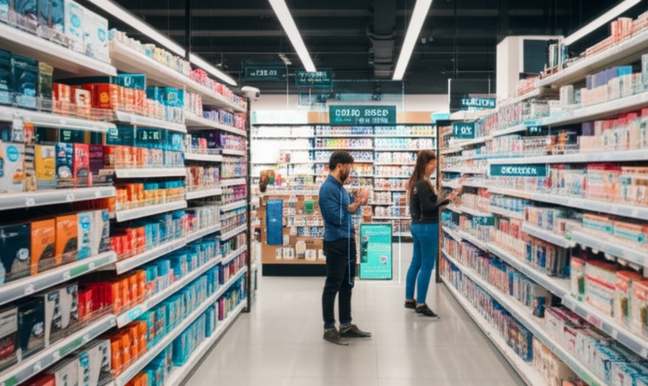
When I first began exploring computer vision in retail, it felt like stepping into a world where pixels told stories—stories of customer behavior, shelf dynamics, and operational inefficiencies that had long gone unnoticed. As an AI architect, I’ve spent years designing systems that don’t just crunch data but interpret the visual world with nuance. Retail, with its blend of chaos and choreography, is one of the most fascinating arenas for this technology.
🛍️ Why Retail Is Ripe for Vision
Retail spaces are inherently visual. From product placement to customer movement, everything is a signal waiting to be decoded. Traditional analytics—POS data, footfall counters—give us numbers. But vision gives us context.
I remember working with a mid-sized grocery chain where the challenge wasn’t lack of data—it was lack of insight. Their shelves were often understocked, promotions went unnoticed, and theft was a silent drain. We deployed a lightweight computer vision system using edge cameras and a cloud-based inference pipeline. Within weeks, they had heatmaps of customer flow, real-time shelf alerts, and even predictive stocking suggestions. It was like giving their store eyes—and a brain.
🔍 Key Applications That Changed My Thinking
Here are a few use cases where computer vision didn’t just add value—it transformed operations:
- Planogram Compliance: Retailers spend millions designing shelf layouts. But are they followed? Vision systems can compare live shelf images to planograms and flag deviations. I’ve seen this reduce merchandising errors by over 40%.
- Inventory Monitoring: Instead of relying solely on barcode scans, cameras can detect empty shelves or misplaced items. One client used this to automate restocking alerts, saving hours of manual checks.
- Customer Behavior Analysis: Vision doesn’t just count people—it understands them. Are shoppers lingering near a product? Ignoring a display? This data helped a fashion retailer redesign their store layout, boosting engagement by 25%.
- Loss Prevention: Traditional CCTV is reactive. Vision systems are proactive. They detect suspicious behavior patterns and alert staff in real time. In one deployment, shrinkage dropped by 18% in three months.
🧠 Architecting the Stack
From a technical standpoint, building a scalable vision system for retail involves:
- Edge Devices: Cameras with onboard processing reduce latency and bandwidth costs.
- Model Optimization: Retail environments are noisy. Models must be trained for occlusion, lighting variation, and diverse product shapes.
- Cloud Integration: For centralized analytics, dashboards, and long-term storage.
- Privacy & Ethics: This is non-negotiable. We anonymize faces, avoid biometric tracking, and ensure compliance with GDPR and local laws.
One of my proudest moments was designing a system that balanced performance with privacy. We used pose estimation and object tracking without facial recognition—proving that ethical AI isn’t a compromise, it’s a design principle.
🚀 What’s Next?
The future of retail vision isn’t just about cameras—it’s about cognition. Imagine systems that not only see but understand intent. That adapt store layouts dynamically. That personalize experiences in real time.
We’re already experimenting with multimodal AI—combining vision with audio and transactional data—to create richer insights. And with generative models, we’re simulating store scenarios before they’re built.
🧩 Final Thoughts
Computer vision in retail isn’t just a tech upgrade—it’s a paradigm shift. As an AI architect, I see it as a bridge between the digital and physical, between data and empathy. It’s about designing systems that don’t just observe but enhance human experience.
If you’re building in this space, my advice is simple: start small, think big, and always design with the user—and the shopper—in mind.